Examine This Report on Bim Service Providers – Barbour Product Search
Examine This Report on Bim Service Providers – Barbour Product Search
You can attempt one (1) Revit resource or CAD resource for one (1) month. To understand more about our CAD studio design, fill up our Request for Services form. BluEntCAD establishes CAD studios for homebuilders, designers and construction firms. Our CAD studio model works as an extension of your internal style group.
“Cadline exceeded our expectations providing the BIM task ahead of time. They demonstrated an in depth understanding of the guidelines and were highly expert in all areas.https://online.unisc.br/seer/index.php/cadpesquisa/comment/view/13012/0/343777 Their knowledge and convenient solutions actually assisted as our client was working on a tight timescale and led to us securing a valuable specification task.” “Fantastic BIM Providers, offered in a prompt manner to the deadlines supplied.

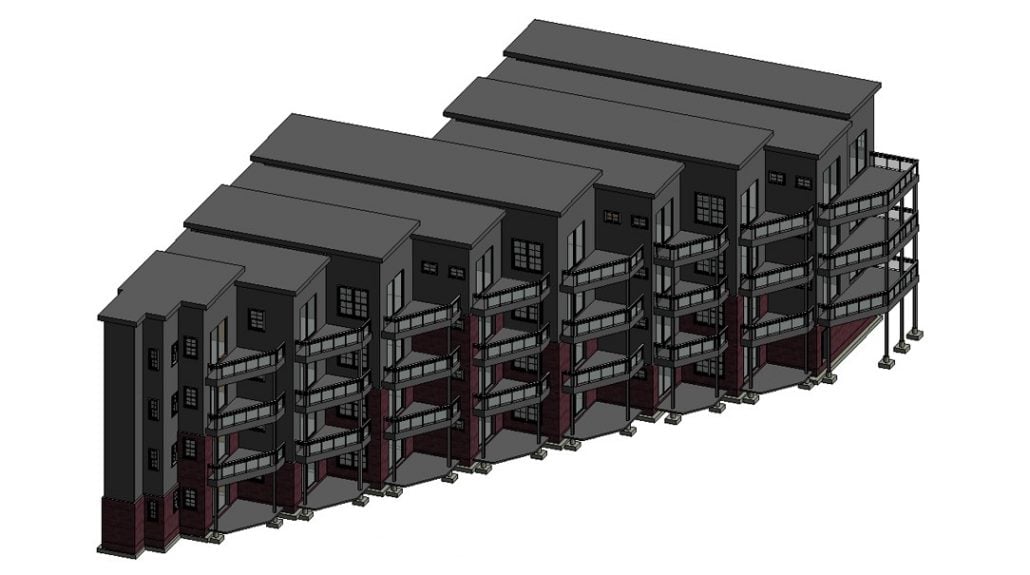
Building information modeling (BIM) is a process supported by different tools, innovations and agreements involving the generation and management of digital representations of physical and practical qualities of locations. Building details designs (BIMs) are computer files (often but not constantly in exclusive formats and including proprietary information) which can be drawn out, exchanged or networked to support decision-making regarding a built possession (bim service company).
The concept of BIM has actually remained in advancement given that the 1970s, but it just ended up being a predetermined term in the early 2000s. Advancement of standards and adoption of BIM has advanced at various speeds in various countries; standards developed in the United Kingdom from 2007 onwards have formed the basis of international standard ISO 19650, released in January 2019 – bim service company.
The first software tools developed for modelling structures emerged in the late 1970s and early 1980s, and included workstation items such as Chuck Eastman’s Structure Description System and GLIDE, RUCAPS, Sonata, Reflex and Gable 4D Series. The early applications, and the hardware required to run them, were pricey, which restricted extensive adoption.
The term ‘Building Information Design’ first appeared in a 1992 paper by G.A. bim service company. van Nederveen and F. P. Tolman. Nevertheless, the terms ‘Building Information Model’ and ‘Building Info Modeling’ (including the acronym “BIM”) did not end up being widely utilized up until some 10 years later on. In 2002, Autodesk launched a white paper entitled “Building Information Modeling,” and other software suppliers also began to assert their participation in the field.
Assisting in exchange and interoperability of details in digital format had actually formerly been used under varying terminology by Graphisoft as “Virtual Structure”, Bentley Systems as “Integrated Project Designs”, and by Autodesk or Vectorworks as “Building Information Modeling” – bim service company. The pioneering function of applications such as RUCAPS, Sonata and Reflex has been acknowledged by Laiserin as well as the UK’s Royal Academy of Engineering.
These applications differ from architectural drafting tools such as AutoCAD by permitting the addition of further information (time, expense, makers’ information, sustainability, and maintenance info, and so on) to the building model. As Graphisoft had actually been developing such solutions for longer than its competitors, Laiserin regarded its ArchiCAD application as then “among the most fully grown BIM services on the marketplace.” Following its launch in 1987, ArchiCAD became concerned by some as the first application of BIM, as it was the first CAD product on a desktop computer able to create both 2D and 3D geometry, as well as the first commercial BIM item for computers.
The Basic Principles Of Bim Services London – Bsl – Building Information Modelling

To achieve interoperability between applications, neutral, non-proprietary or open requirements for sharing BIM data among different software application applications have been developed. Poor software interoperability has actually long been concerned as a challenge to market performance in general and to BIM adoption in particular. In August 2004 an US National Institute of Standards and Innovation (NIST) report conservatively estimated that $15.
capital centers industry due to inadequate interoperability developing from “the extremely fragmented nature of the industry, the industry’s ongoing paper-based business practices, a lack of standardization, and inconsistent innovation adoption among stakeholders”. An early BIM standard was the CIMSteel Combination Requirement, CIS/2, an item model and information exchange file format for structural steel project info (CIMsteel: Computer Integrated Manufacturing of Constructional Steelwork).
It was developed by the University of Leeds and the UK’s Steel Building Institute in the late 1990s, with inputs from Georgia Tech, and was authorized by the American Institute of Steel Building And Construction as its data exchange format for structural steel in 2000. BIM is often connected with Industry Foundation Classes (IFCs) and aecXML data structures for representing information developed by buildingSMART – bim service company.


